

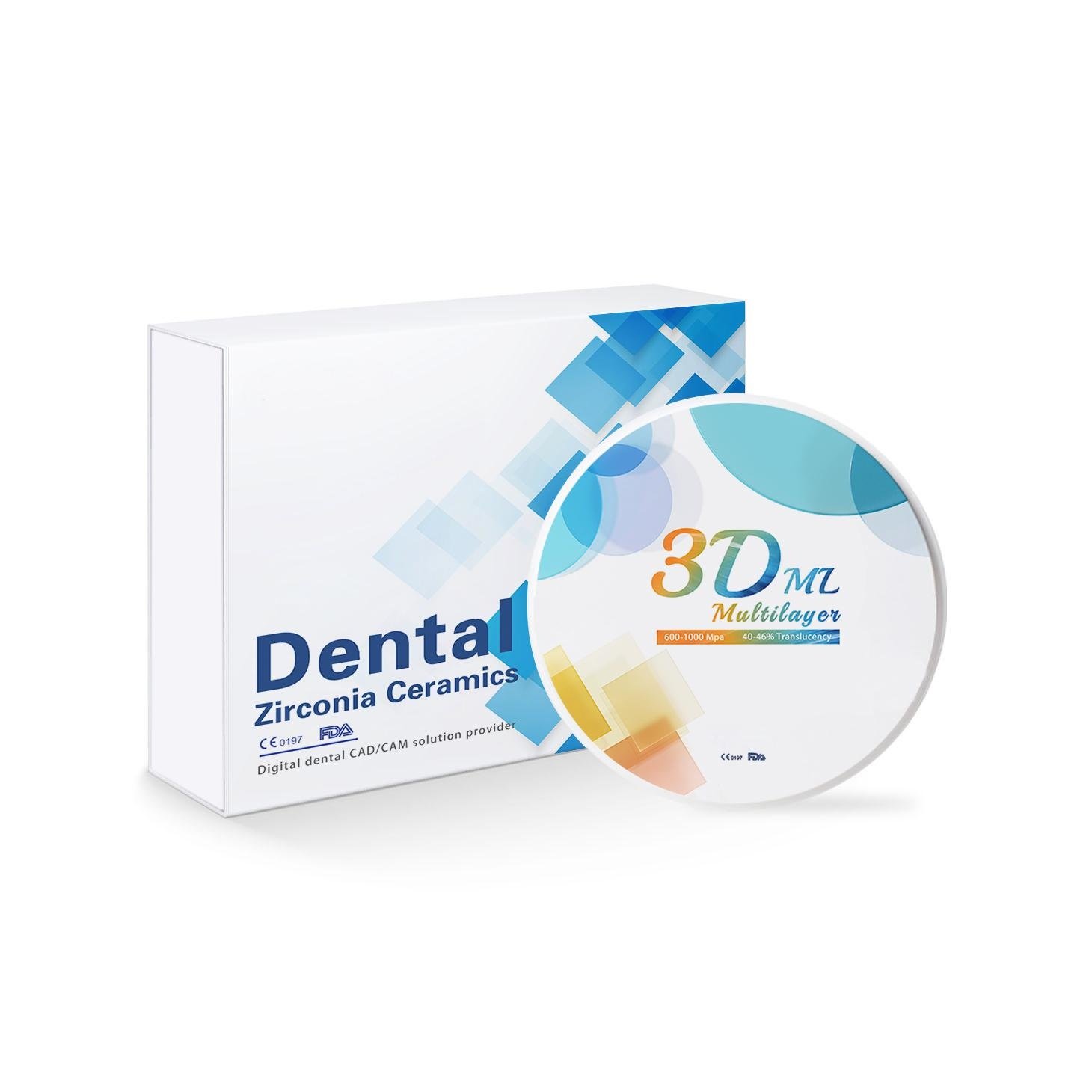
3D-ML Zirconia Multilayer

3D-ML 6-Layer Multilayer Zirconia with 46%–49% translucency and 800–1000 MPa strength. 11-step gradient delivers natural aesthetics for anterior and posterior restorations.

3D-ML Zirconia Multilayer

The CMEC 3D-ML Multilayer Zirconia Block features a 6-layer gradient structure with 11-step gradual transitions in color, translucency, and strength. Designed to replicate the natural optical properties of tooth enamel, the 3D-ML delivers exceptional aesthetics for anterior and posterior restorations.

Key Features

  • 6-Layer / 11-Step Gradient: Ultra-smooth transitions across color, translucency, and strength zones
  • Translucency Range: 46%–49% light transmittance for realistic enamel permeability
  • Bending Strength: 800–1000 MPa — optimized for aesthetic anterior restorations
  • Natural Color Gradient: Decreasing translucency from incisal (49%) to cervical (46%) replicates natural tooth optics
  • Workflow Efficiency: Pre-shaded multilayer eliminates manual dyeing steps

Technical Specifications

Layer Structure6 Layers / 11-Step Gradient
Light Transmittance46% – 49%
Bending Strength800 – 1000 MPa
ProcessingMilled, then sintered
Compatible SystemsAll major CAD/CAM platforms

Indications

Anterior crowns, veneers, inlays, onlays, and up to 3-unit bridges. Best suited for cases where aesthetics are the priority.

Value Proposition

The 3D-ML offers an excellent balance of aesthetics and cost-effectiveness, making it a popular choice for dental labs processing high volumes of anterior restorations.

Frequently Asked Questions
What is a dental simulation system used for?+

A dental simulation system is a professional training solution for dental students and professionals to practice clinical procedures in a safe, controlled environment. It simulates real dental clinic scenarios including restorative dentistry, implant training, endodontics, and prosthodontics. Dental simulation systems with phantom heads provide preclinical lab training that closely mirrors actual patient treatment.

What are the core features?+

Key features: realistic phantom head with adjustable jaw, 3D visualization, haptic feedback, interactive guidance software, one-button reset, and multi-student positions for group training.

What materials are used?+

Durable metal frames with epoxy coating, industrial-grade MDF surfaces, and non-toxic medical-grade silicone and thermoplastic components meeting CE, ISO standards.

Does it support VR or digital simulation?+

Yes! Many systems integrate VR technology and 3D digital models for immersive training with real-time performance feedback.

Is professional installation required?+

Basic installation needs only power and compressed air. We provide professional on-site guidance and remote video support for large labs.

How to maintain the system?+

Wipe with damp cloth, clean phantom head with mild soap, inspect connections monthly, replace worn teeth regularly, store in dry environment.

Can it support multi-student training?+

Yes! Dual-position systems and modular labs support 10-50+ student stations with instructor monitoring.

What should I consider when purchasing?+

Consider: training purpose, features, durability, certifications (CE, ISO), after-sales service, budget, and customization options.

Are there bulk purchase discounts?+

Yes! Competitive pricing for 5+ units. Contact us for a personalized quotation.

Can the system be customized?+

Full OEM/ODM customization: size, color, branding, features, accessories, and packaging.